
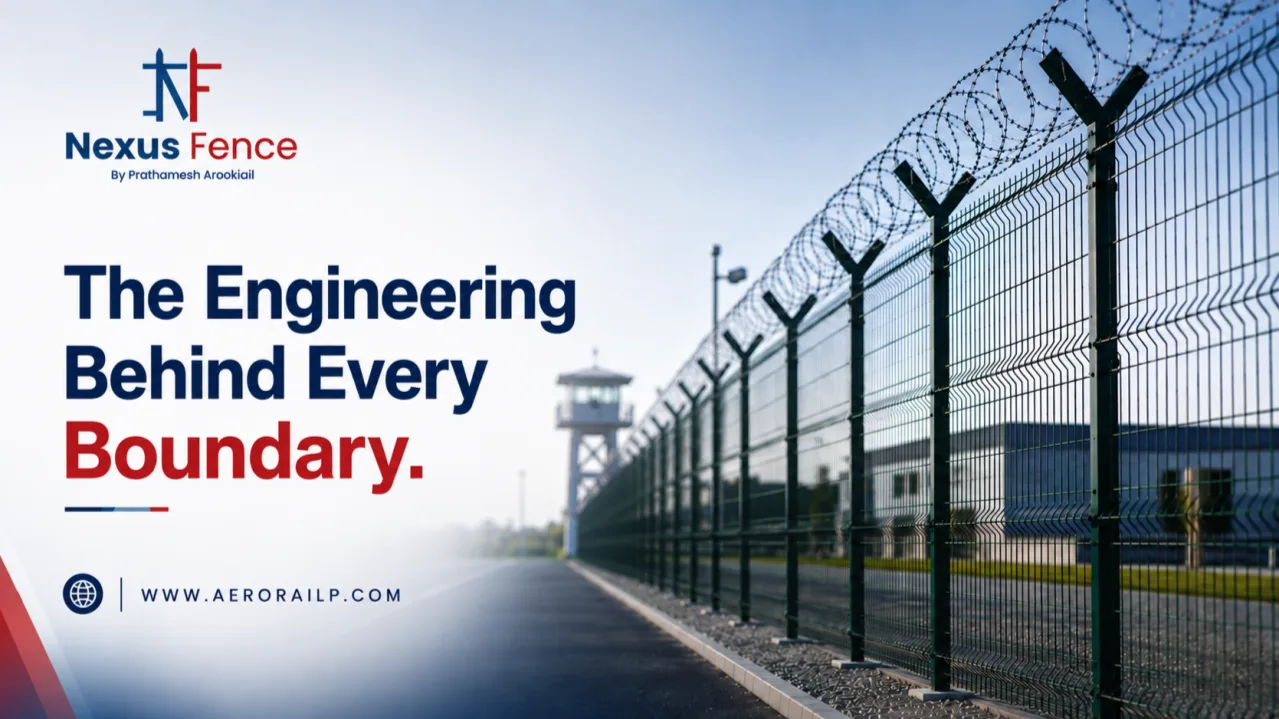
A fence once had a straightforward job. Today, modern infrastructure demands far more from perimeter systems — and the application, not the fence, should drive the specification.
A fence once had a straightforward job: define a property, restrict access and withstand the weather. Today, that expectation has changed.
Modern infrastructure demands more from perimeter systems. Industrial facilities, airports, wildlife enclosures and manufacturing environments each operate with different security, safety and operational priorities. The boundary still matters — what has changed is what we expect it to do.
Changing standards of site protection
Site protection is no longer judged by the presence of a fence alone. Visibility, structural strength, mesh configuration, corrosion resistance, installation requirements and security integration can all influence the right specification.
A rigid welded mesh system can provide clear sightlines and a defined physical barrier, while anti-climb or higher-density configurations may suit restricted facilities. Heavy-duty containment systems can address wildlife and livestock applications.
Application dictates security architecture
There is no universal security requirement. Nexus Fence offers welded wire mesh with configurable mesh sizes, wire diameters and robust post sections, supported by galvanized and powder-coated finishes.
For high-security environments, Nexus Fortis uses a 76 × 12.7 mm anti-cut, anti-climb mesh that can integrate with razor wire, concertina coils, electric fencing and PIDS technologies such as CCTV and optical sensors.
For wildlife parks, zoos, farms and sanctuaries, Nexus Terra focuses on tighter mesh configurations, heavy-duty wire and containment requirements. Inside industrial facilities, Nexus Indus-Shield supports machine guarding and personnel segregation around robotic arms, production lines and hazardous zones.
Engineering for diverse site conditions
Outdoor infrastructure adds another engineering variable: the environment. Weather exposure, site conditions, operational activity and maintenance requirements can affect material selection, coating, wire diameter, mesh geometry and support structure.
Nexus also extends beyond conventional fencing with Nexus Lumos, integrating IP65/67-rated water-resistant LED lighting into fence posts. Nexus Agri-Armor addresses farmland, livestock and crop protection, while Nexus Roof-Shield and Nexus Reinforce support roofing insulation and welded structural mesh applications.
A broader approach to security systems
The better question is not simply, “What type of fence should we install?” It is: “What does this site actually need its boundary or protective system to achieve?”
That could mean intrusion resistance, visual monitoring, animal containment, machine guarding, illumination, agricultural protection or integration with additional security technologies. At Nexus Fence by Prathamesh AeroRail, the portfolio is built around these varied requirements rather than a single fencing format.
Planning a new industrial, commercial, agricultural, infrastructure or high-security project? Connect with the Nexus team to discuss the right system for your application.